
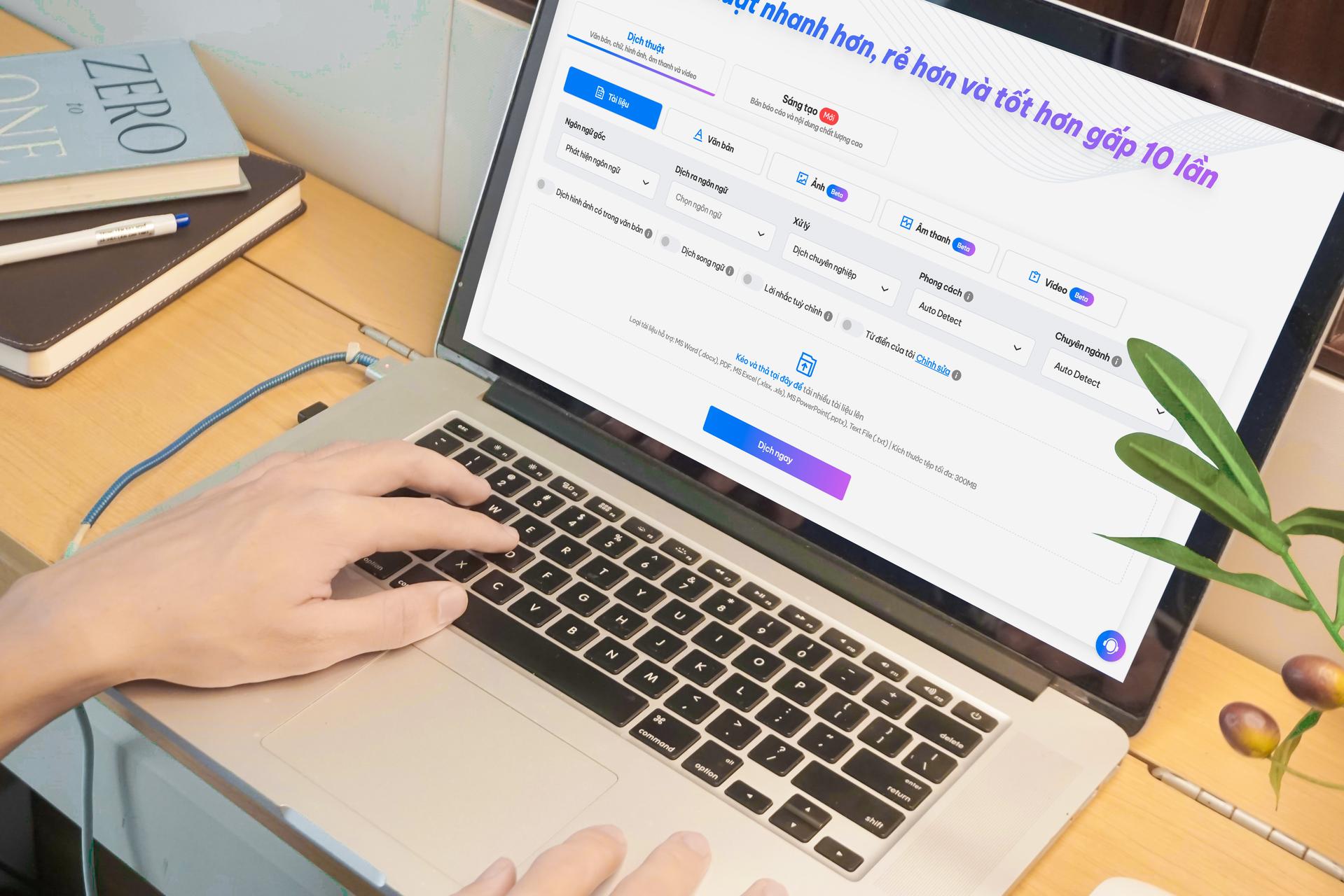
Enterprise workflows frequently demand high-quality English to Arabic image translation to maintain global communication standards.
Many organizations struggle when localized graphics lose their original formatting or structural integrity during the conversion process.
Navigating the complexities of bidirectional text requires a sophisticated technological approach that goes beyond simple character recognition.
Technical documentation, marketing brochures, and architectural blueprints often contain embedded text that is difficult to extract and translate.
The shift from Left-to-Right (LTR) to Right-to-Left (RTL) orientation introduces significant challenges for standard optical character recognition (OCR) engines.
Achieving a professional result requires an understanding of both linguistic nuances and digital layout reconstruction.
Why Image files often break when translated from English to Arabic
The primary reason English to Arabic image translation often fails is the radical difference in text directionality.
Standard translation tools are frequently designed for LTR languages and lack the logic to mirror graphical elements correctly.
When text is simply replaced without adjusting the layout, the visual hierarchy of the image is completely destroyed.
This leads to a confusing user experience for Arabic-speaking stakeholders who expect a natural reading flow.
Arabic script is cursive and context-sensitive, meaning that letters change shape depending on their position within a word.
Legacy OCR systems often fail to render these ligatures correctly, resulting in disconnected or backwards characters.
Furthermore, the spatial requirements for Arabic text can vary significantly from English, causing text boxes to overflow or overlap.
Without intelligent resizing algorithms, the translated image becomes cluttered and unreadable for professional use.
List of typical issues in image translation
One of the most frustrating problems in English to Arabic image translation is font corruption or the "tofu" effect.
This occurs when the system lacks the specific glyphs needed to render complex Arabic characters properly.
Instead of clear calligraphy, the output displays empty boxes or garbled symbols that provide no value to the end user.
Enterprises must ensure their translation stack supports Unicode-compliant Arabic typefaces to maintain brand consistency.
Table misalignment and image displacement also plague low-quality translation workflows.
In a technical diagram, an arrow pointing to a specific component in English may point to empty space after an Arabic translation.
This happens because the background layers are not synchronized with the newly generated RTL text layers.
Data tables are particularly vulnerable, as the column order must be reversed to remain logical for an Arabic reader.
Pagination and Document Flow Problems
When translating multi-page image sets or scanned PDFs, pagination often becomes a technical nightmare.
A document that starts on the left in English must logically start on the right in its Arabic counterpart.
Most automated tools ignore this structural requirement, leaving the user to manually reorder dozens of translated assets.
This manual intervention increases the risk of human error and significantly slows down the time-to-market for international projects.
The Complexity of Embedded Metadata
Images often contain hidden metadata or alt-text that must also be addressed during the translation phase.
Standard image editors do not provide a way to translate this metadata programmatically across thousands of files.
Failure to translate these invisible layers can negatively impact SEO and accessibility for Arabic-speaking users.
A comprehensive solution must address both the visible pixels and the underlying data structures.
How Doctranslate solves these issues permanently
Doctranslate leverages advanced AI-powered layout preservation to ensure that every translated image looks as professional as the original.
By utilizing deep learning models, the platform identifies every graphical element, from lines to logos, and mirrors them intelligently.
This ensures that the spatial relationship between text and imagery remains intact regardless of the language direction.
To experience this technology firsthand, you can <a href=
Tinggalkan komentar