
Why API files often break when translated from French to Vietnamese
Enterprises operating in global markets frequently face technical hurdles when automating document localization through an API.
The transition from French to Vietnamese is particularly challenging because of the significant differences in character density and grammatical structure.
Standard translation engines often fail to account for these linguistic nuances, leading to broken layouts and unreadable documents.
This guide explores how to handle French to Vietnamese API translation effectively while maintaining pixel-perfect formatting.
French syntax tends to be more expansive than English, but Vietnamese presents a different set of challenges regarding vertical space and diacritics.
When a French document is processed via a standard API, the resulting Vietnamese text may overflow text boxes or overlap with graphical elements.
These structural discrepancies occur because most automated systems treat text as simple strings rather than layout-aware objects.
Ensuring a seamless flow requires an engine that understands the spatial relationship between text and design.
Furthermore, the technical architecture of many legacy APIs does not support the complex tone marks used in the Vietnamese alphabet.
French uses specific accents like the cedilla or circumflex, but Vietnamese requires multiple diacritics on a single vowel.
If the encoding is not handled correctly during the API call, the output becomes a series of broken symbols known as mojibake.
Large-scale enterprises cannot afford these errors, as they undermine professional credibility and user experience.
Modern translation workflows demand a more robust approach to French to Vietnamese API translation to avoid manual post-editing costs.
By integrating advanced layout-preservation technology, companies can automate the localization of complex PDFs, spreadsheets, and presentations.
This strategy minimizes human intervention and accelerates time-to-market for international documentation.
The goal is to achieve a result where the translated Vietnamese file looks identical to the French original.
Typical issues in automated French to Vietnamese translation
One of the most frequent problems encountered during automated translation is font corruption and character encoding failure.
Vietnamese utilizes a Latin-based script, yet it requires specific Unicode support that many standard French fonts do not provide.
When the API replaces French text with Vietnamese without checking font compatibility, characters with diacritics often revert to a default, ugly typeface.
This inconsistency creates a disjointed reading experience and can even render technical data completely incorrect.
Table misalignment is another critical pain point for enterprise-level document translation via API.
French words are often longer than their Vietnamese counterparts, or vice versa, depending on the technical context and terminology used.
In a structured document like an invoice or a technical specification, this change in string length can push content out of table cells.
Without smart layout adjustments, your data tables become messy and difficult for Vietnamese stakeholders to interpret.
Image displacement and pagination problems frequently haunt developers working with complex document formats.
As text expands during the translation from French to Vietnamese, it can push images to subsequent pages or hide them behind text blocks.
This is especially problematic in brochures or manuals where the visual context must remain strictly tied to the descriptive text.
Static APIs simply replace text, but intelligent solutions must recalculate coordinates to ensure the entire page remains cohesive.
Finally, the loss of hyperlinking and interactive elements is a common technical failure in basic API integrations.
Many tools strip away the underlying metadata of a French document when converting it to Vietnamese.
This results in broken internal links, lost bookmarks, and non-functional tables of contents in the final exported file.
Maintaining the functional integrity of the document is just as important as the accuracy of the linguistic translation.
How Doctranslate solves these issues permanently
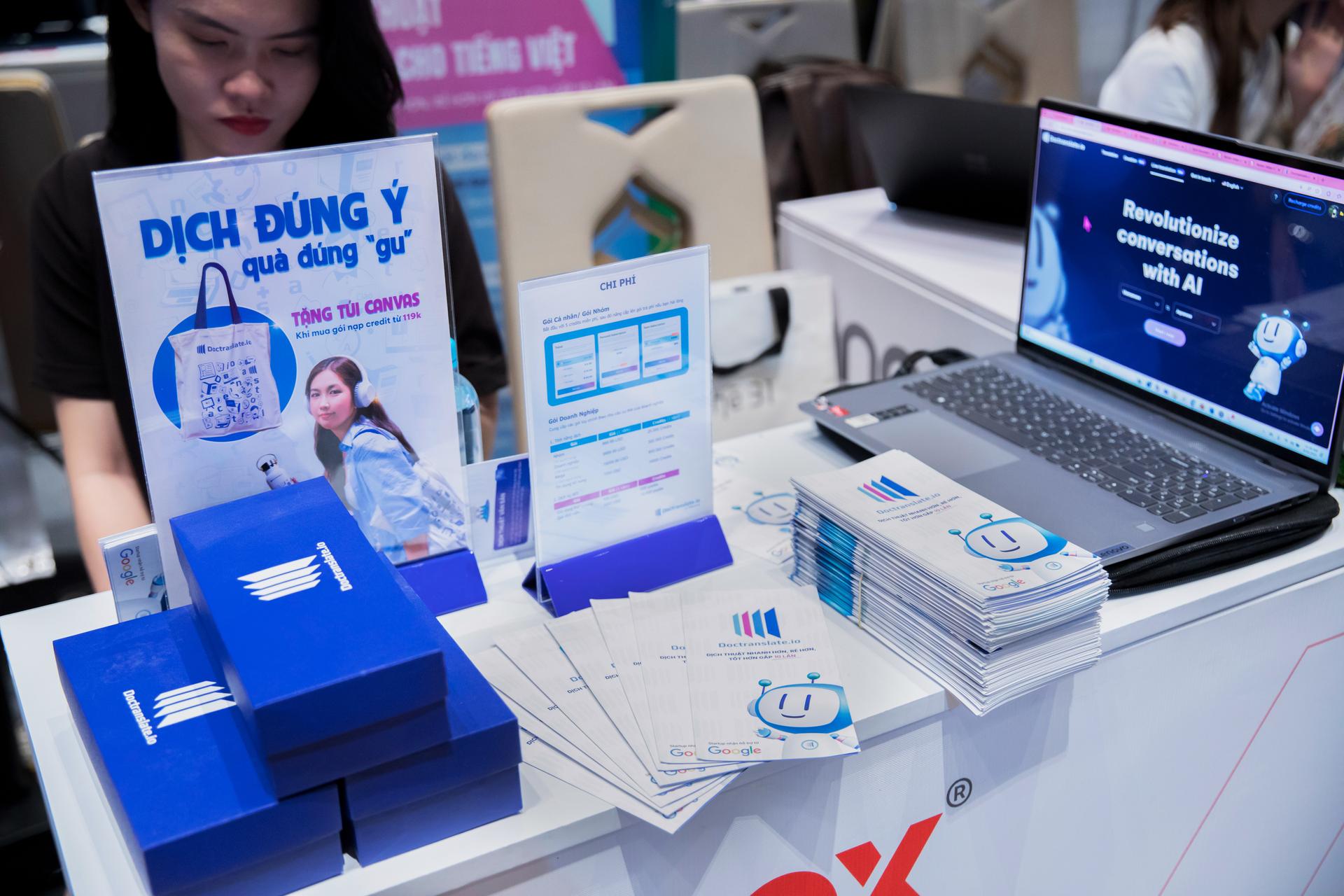
Doctranslate addresses these enterprise challenges by utilizing an AI-powered layout preservation engine that acts as a bridge between languages.
Unlike traditional tools, our system analyzes the visual structure of the French document before any translation occurs.
It identifies boundaries, font styles, and object positions to create a digital blueprint for the Vietnamese output.
This ensures that every element remains in its intended place regardless of text expansion or contraction.
Smart font handling is a core feature that prevents the character corruption issues typical of French to Vietnamese API translation.
Our engine automatically detects when a source font lacks Vietnamese glyph support and suggests a matching alternative.
This keeps the aesthetic of your enterprise documents consistent while ensuring full readability of all tone marks.
The result is a professional document that looks like it was originally designed in Vietnamese.
To implement these solutions, developers can easily integrate our <a href=
Để lại bình luận