
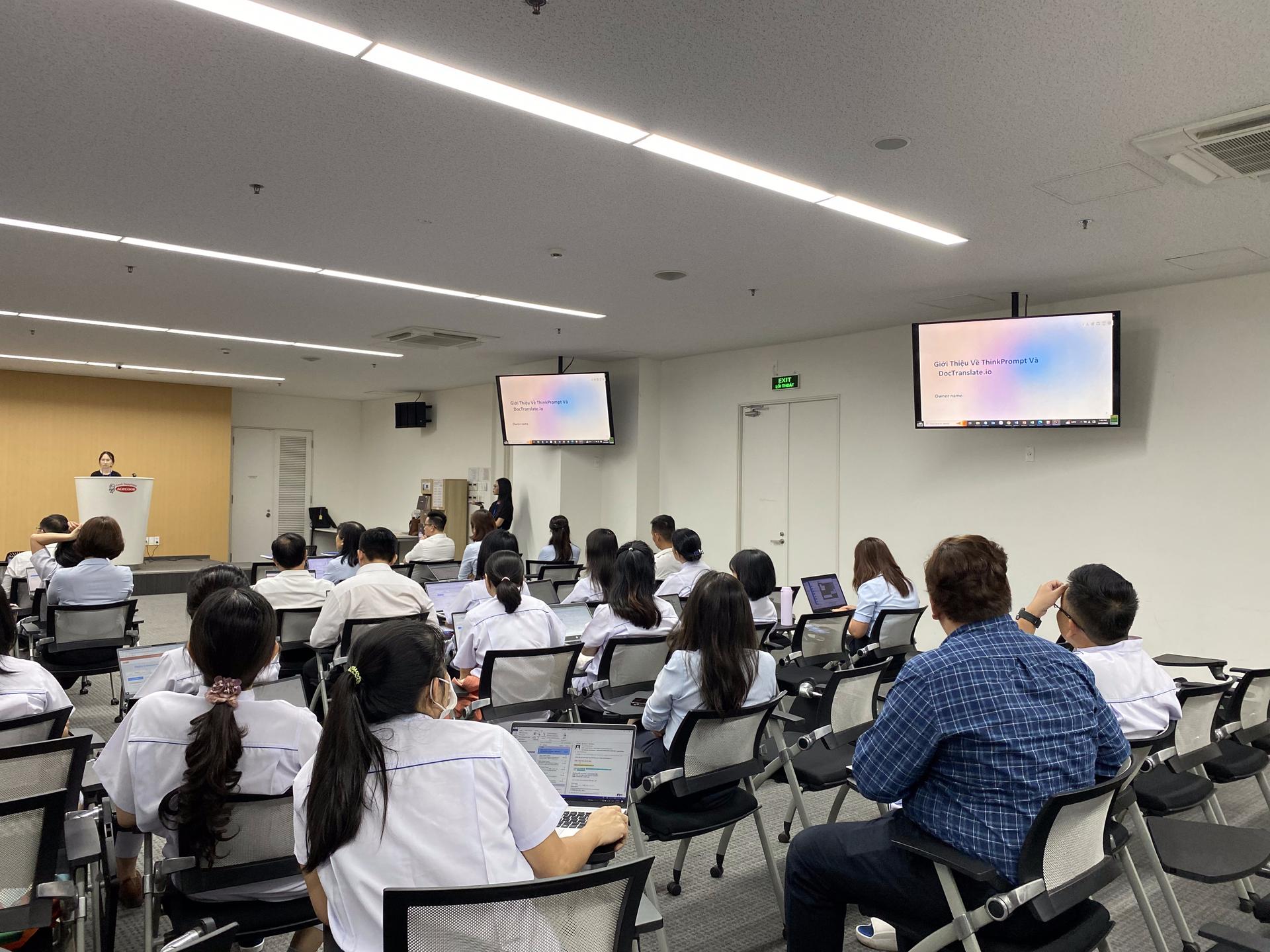
Expanding business operations between Vietnam and Thailand requires more than just basic communication tools; it demands high-fidelity linguistic accuracy.
Vietnamese to Thai audio translation has become a cornerstone for regional enterprises looking to bridge the gap in legal, technical, and marketing sectors.
However, moving from spoken Vietnamese to written or spoken Thai involves navigating complex phonetic landscapes and distinct cultural nuances.
This article explores why standard tools often fail and how enterprise-grade solutions provide the necessary reliability for global scale.
Why Audio files often break when translated from Vietnamese to Thai
The primary reason Vietnamese to Thai audio translation often results in broken or nonsensical output is the fundamental difference in tonal structures.
Vietnamese utilizes six distinct tones, while Thai employs five, and the mapping between these two systems is not a simple one-to-one conversion.
When an automated system attempts to transcribe Vietnamese audio without high-resolution frequency analysis, it often misidentifies the intended word.
This error then cascades into the translation phase, where the Thai engine receives the wrong semantic input, leading to complete contextual failure.
Furthermore, the temporal patterns of speech in Vietnam vary significantly from those in Thailand, impacting how AI models segment audio data.
Vietnamese is primarily monosyllabic, whereas Thai contains many polysyllabic words borrowed from Pali and Sanskrit.
If the transcription engine fails to recognize where one word ends and the next begins, the resulting text becomes a jumbled string of characters.
Enterprises often face the frustration of receiving Thai translations that lack the formal register required for professional corporate environments.
Another technical hurdle is the environmental noise and varying accents found in authentic business recordings.
A conference call recorded in Ho Chi Minh City may have different acoustic properties and regionalisms compared to one from Hanoi.
Without robust noise-cancellation and accent-aware models, the initial transcription layer of the translation process collapses.
This technical breakdown ensures that the subsequent Thai output is riddled with gaps and inaccuracies that require expensive manual correction.
List of typical issues: From Font Corruption to Transcription Errors
Inaccurate Phonetic Mapping and Transcription Errors
One of the most frequent issues in Vietnamese to Thai audio translation is the phonetic
Để lại bình luận