
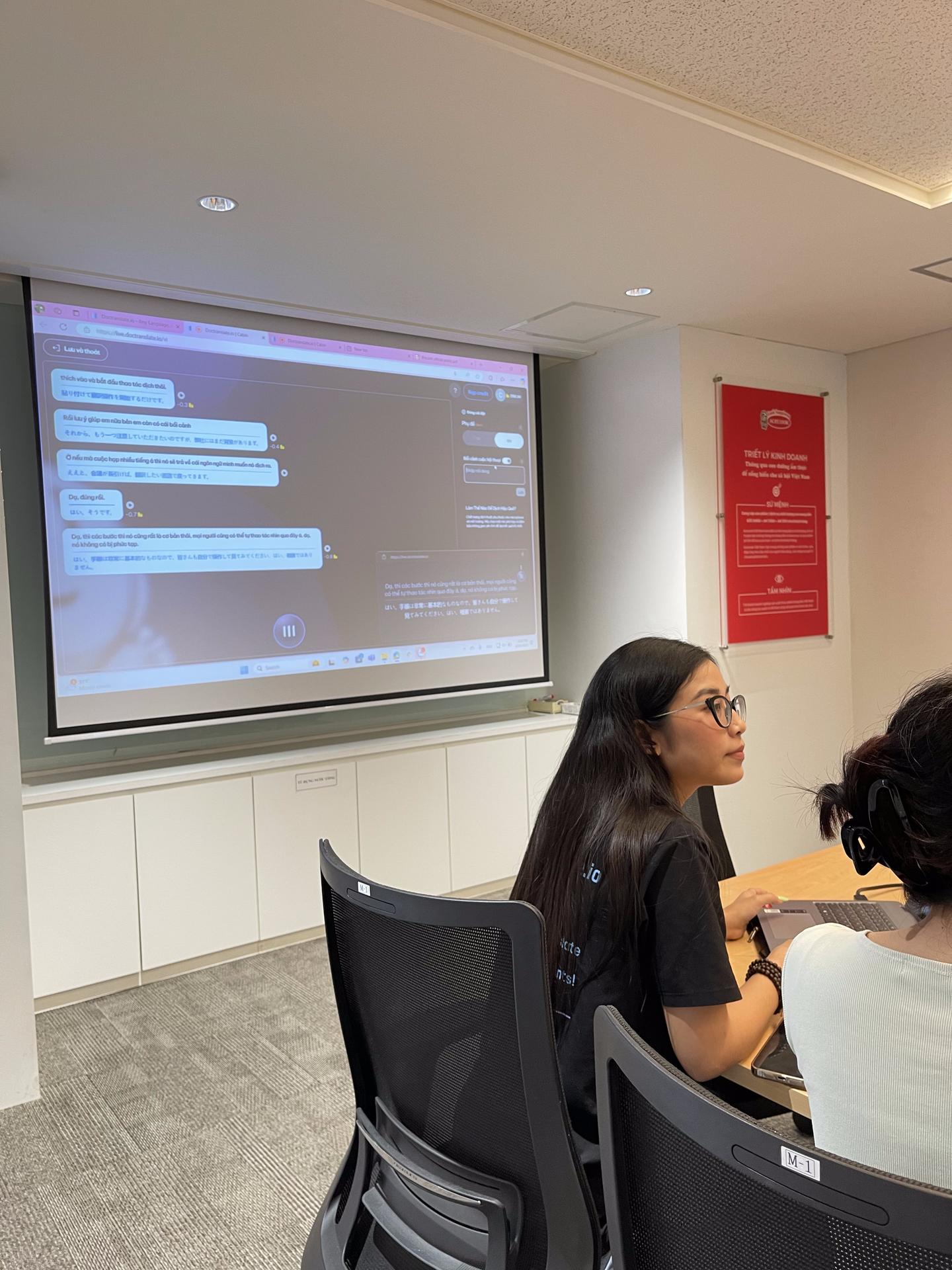
The Intricate Challenges of Audio Translation via API
Developing applications that bridge language barriers is a significant challenge,
especially when dealing with audio content. The task of creating a system with an English to Japanese audio translation API is far more complex than a simple text translation.
Developers must contend with a multi-stage process that includes audio processing,
accurate transcription, and nuanced linguistic conversion.
Each stage presents its own unique set of technical hurdles that can impact the quality and reliability of the final output.
From handling diverse audio encodings to understanding deep cultural contexts,
the path is filled with potential pitfalls.
A robust solution requires a sophisticated backend capable of managing these complexities seamlessly.
Encoding and Format Labyrinths
Audio files are not a monolith; they come in a wide array of formats like MP3,
WAV, M4A, and FLAC, each with different containers and codecs.
An effective API must be able to ingest and normalize these various formats without requiring the developer to perform manual conversions.
This involves handling different sample rates, bit depths, and channel configurations to prepare the audio for transcription.
Furthermore, issues like background noise, low-quality recordings,
and variable audio levels can severely degrade the accuracy of any subsequent processing.
A premier API service must incorporate advanced signal processing techniques to clean and enhance the audio signal before the transcription engine even begins its work.
Without this crucial preprocessing step, the quality of the entire translation cascade is compromised from the start.
The Nuance of Transcription Accuracy
Once the audio is processed, the next major hurdle is converting speech into text (STT).
This is where the diversity of human speech becomes a significant factor.
English, for example, has a vast range of accents, dialects, and idiomatic expressions that can confuse transcription algorithms.
The system must be trained on massive datasets to accurately recognize words spoken by individuals from different regions.
Technical jargon, industry-specific terminology, and proper nouns add another layer of complexity to the transcription process.
An STT engine must correctly identify these specialized terms to maintain the original message’s integrity.
Failure to do so can lead to nonsensical or misleading text, which makes accurate translation impossible.
Contextual Translation Hurdles for Japanese
The final step, translating the transcribed English text into Japanese, is perhaps the most difficult.
Japanese and English have fundamentally different grammatical structures, with Japanese following a Subject-Object-Verb (SOV) pattern compared to English’s Subject-Verb-Object (SVO).
A simple word-for-word replacement will result in awkward and often incomprehensible sentences.
The translation engine must be intelligent enough to re-order and restructure sentences completely.
Moreover, Japanese culture places a strong emphasis on politeness and social context,
which is deeply embedded in the language through its system of honorifics (Keigo).
The choice of words and sentence structure can change dramatically depending on the relationship between the speaker and the listener.
An API must have some level of contextual awareness to select the appropriate level of formality, ensuring the translation is not only accurate but also culturally appropriate.
Introducing the Doctranslate API for Seamless Audio Translation
Navigating the complexities of audio transcription and translation requires a powerful,
specialized tool built for developers. The Doctranslate API provides a comprehensive solution designed to handle the entire workflow,
from audio file submission to receiving highly accurate Japanese text.
It abstracts away the difficult backend processes, allowing you to focus on building your application’s core features.
Our API is built on a RESTful architecture, ensuring straightforward integration with any modern programming language or platform.
By utilizing standard HTTP requests, you can easily send your audio files and receive structured JSON responses containing both the transcribed and translated content.
This streamlined process significantly reduces development time and eliminates the need to build and maintain separate transcription and translation systems. Our service offers a powerful way to Automatically convert voice to text & translate with exceptional accuracy, simplifying your entire workflow.
Step-by-Step Guide to Integrating the Doctranslate API
Integrating our API to perform audio translation from English to Japanese is a simple and well-documented process.
This guide will walk you through the necessary steps, from authentication to handling the final output.
We will provide a practical code example in Python to demonstrate how quickly you can get started.
Following these instructions will empower you to add advanced audio translation capabilities to your application.
Step 1: Authentication and Setup
Before making any API calls, you need to obtain your unique API key from your Doctranslate developer dashboard.
This key is essential for authenticating your requests and must be kept confidential.
All API requests are authenticated by including this key in the HTTP request headers.
This ensures that all communication with our servers is secure and authorized.
The API key should be passed in an `Authorization` header with the `Bearer` scheme.
For example, your header would look like `Authorization: Bearer YOUR_API_KEY`.
It is a best practice to store your API key in an environment variable or a secure secrets manager rather than hardcoding it directly into your application’s source code.
This protects your credentials and makes key rotation easier to manage.
Step 2: Preparing Your Audio File
The Doctranslate API supports a wide variety of common audio formats, including MP3, WAV, M4A, and FLAC.
For best results, it is recommended to use a lossless format like WAV or FLAC if possible,
although high-quality MP3 files will also yield excellent results.
Ensure your audio has a minimum sample rate of 16kHz and is recorded in a single channel (mono) for optimal transcription accuracy.
While our API includes pre-processing to handle noise, providing the cleanest possible audio will always improve the outcome.
Minimize background noise, ensure the speaker is close to the microphone, and avoid audio clipping or distortion.
These simple best practices in audio preparation can have a significant positive impact on the quality of the transcription and, consequently, the final translation.
Step 3: Making the API Request with Python
With your API key and audio file ready, you can now make a request to the translation endpoint.
You will be sending a `POST` request to the `/v2/translate/document` endpoint, which is a versatile endpoint that handles various file types, including audio.
The request will be a multipart/form-data request, containing the audio file and the translation parameters.
The key parameters you need to specify are `source_lang` as `en` for English and `target_lang` as `ja` for Japanese.
The audio file itself should be attached to the `file` field in the form data.
Here is a complete Python example using the popular `requests` library to demonstrate the process.
import requests import os # Retrieve your API key from environment variables API_KEY = os.getenv('DOCTRANSLATE_API_KEY') API_URL = 'https://developer.doctranslate.io/v2/translate/document' # Path to your local audio file FILE_PATH = 'path/to/your/english_audio.mp3' # Set the headers for authentication headers = { 'Authorization': f'Bearer {API_KEY}' } # Define the translation parameters data = { 'source_lang': 'en', 'target_lang': 'ja' } # Open the file in binary read mode with open(FILE_PATH, 'rb') as f: files = { 'file': (os.path.basename(FILE_PATH), f, 'audio/mpeg') } # Make the POST request to the API try: response = requests.post(API_URL, headers=headers, data=data, files=files) response.raise_for_status() # Raise an exception for bad status codes (4xx or 5xx) # Process the JSON response translation_data = response.json() print("Successfully received translation:") print(translation_data) except requests.exceptions.RequestException as e: print(f"An error occurred: {e}")Step 4: Processing the JSON Response
Upon a successful request, the Doctranslate API will return a JSON object containing the results of the operation.
This response is structured to be easily parsable and provides all the necessary information.
You should design your application to handle this JSON payload to extract the translated content and display it to the user or save it for further processing.The response will typically include the original transcribed text as well as the final translated text.
For instance, the JSON might contain keys like `original_text` and `translated_text`.
Your code should parse this response, retrieve the value associated with the `translated_text` key, and ensure it is handled with the correct UTF-8 encoding to display the Japanese characters properly.Key Considerations for English-to-Japanese Audio Translation
Successfully implementing an English to Japanese audio translation API goes beyond just making the API call.
Developers must also consider the unique characteristics of the Japanese language to ensure the final output is both functional and user-friendly.
Handling character encodings, understanding cultural nuances, and ensuring proper display are critical for a high-quality user experience.
Attention to these details will set your application apart.Handling Japanese Characters and Encodings
The Japanese writing system uses three different scripts: Kanji, Hiragana, and Katakana.
To render these characters correctly, you must use the UTF-8 encoding throughout your entire application stack.
This includes your database, backend services, and frontend display logic.
Using any other encoding can lead to `mojibake`, where characters are displayed as garbled or nonsensical symbols.When you receive the JSON response from the Doctranslate API, the Japanese text will be encoded in UTF-8.
Ensure that your programming language’s JSON parser is configured to interpret this encoding correctly.
Similarly, when displaying the text in a web browser or mobile application, set the `Content-Type` header or meta tag to specify `charset=UTF-8` to guarantee proper rendering for all users.Cultural and Contextual Nuances
As mentioned earlier, Japanese has a complex system of politeness known as Keigo.
While our AI-powered translation engine is highly advanced and context-aware, the level of formality in the source English audio can influence the translation.
For applications in a formal business context, it’s important to be aware that the translation will reflect the neutrality of a standard translation model.
This is generally suitable for a wide range of applications.For highly sensitive or formal communications, you might consider post-processing rules or providing context selectors for users.
However, for the vast majority of use cases, such as transcribing meetings, lectures, or media content,
the Doctranslate API provides a translation that is accurate and contextually appropriate.
Understanding these nuances helps in setting the right expectations for the technology’s capabilities.Formatting and Display
Properly formatting the translated Japanese text is crucial for readability.
Unlike English, Japanese does not use spaces between words, so line breaks and paragraph structure become even more important for guiding the reader’s eye.
When displaying long-form translated text, ensure your UI respects paragraph breaks from the original transcription.
This helps organize the content in a way that feels natural to a native Japanese reader.Additionally, ensure that the fonts used in your application include full support for Japanese characters.
Most modern operating systems and web browsers have excellent default fonts, like Meiryo on Windows or Hiragino on macOS.
However, if you are using custom fonts, verify their Japanese character support to avoid rendering issues where some characters might appear as empty boxes or fall back to a less desirable font.Finalizing Your Integration and Further Resources
Integrating an API for translating audio from English to Japanese is a powerful way to enhance your application’s global reach.
By leveraging the Doctranslate API, you can bypass the significant technical hurdles of audio processing, transcription, and translation.
This allows you to implement a sophisticated feature with just a few lines of code, saving valuable development time and resources.
The result is a fast, reliable, and highly accurate translation solution.We have covered the entire process, from understanding the core challenges to implementing a step-by-step solution with Python.
The key takeaways are the importance of a robust API, proper handling of Japanese-specific characteristics like encoding and context, and careful processing of the API’s response.
With these guidelines, you are well-equipped to build a seamless audio translation experience for your users.
For more advanced options and detailed endpoint references, be sure to consult the official Doctranslate developer documentation.

Dejar un comentario